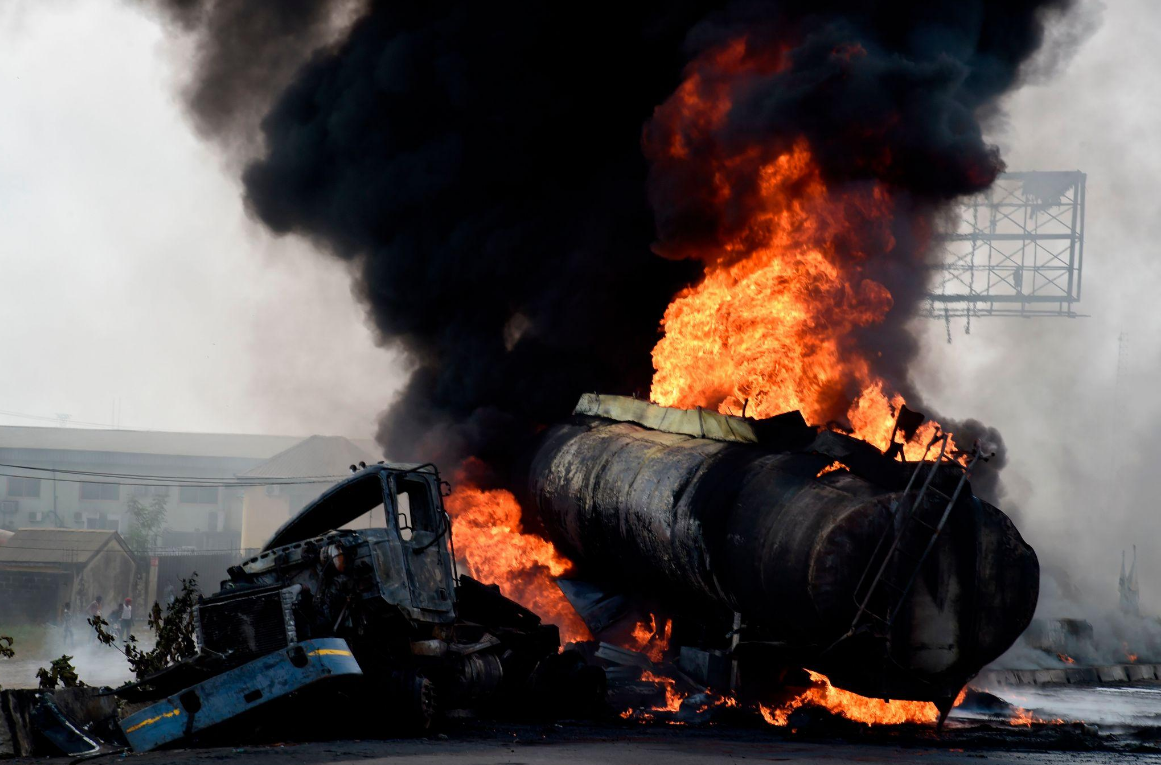
The big picture: The petrol tankers explosion reported in Agbor on October 18 has renewed concerns about the safety of transporting petroleum products through densely populated communities. Beyond the immediate destruction, the incident raises a more important question: what must change to prevent another disaster?
IKA, DELTA STATE — Two petrol tankers collided along the Old Lagos–Asaba Road, around Okoh Junction in Agbor, Ika South Local Government Area, and reportedly triggered a fire that spread to nearby vehicles and properties, raising fresh concerns about road safety, emergency preparedness and the risks associated with transporting highly flammable products through busy urban areas.
Reports published on October 18 and 19, 2026, described significant damage to buildings, roadside properties and vehicles. Some reports indicated that one people was feared dead, although the final casualty figures and the full extent of the damage require confirmation from the relevant authorities.
Zoom in: What happened?
According to media reports, two petrol tankers were involved in a collision before the fire broke out. One report attributed the incident to a possible brake failure, but the precise cause has not been conclusively established in the information available for this report.
The resulting fire reportedly affected nearby vehicles and buildings, including a two-storey structure. The incident disrupted the affected area and exposed the vulnerability of businesses and residents operating close to a busy transport corridor.
The chairmen of Ika South and Ika North-East local government areas reportedly visited the scene on October 19 to assess the damage.
The circumstances surrounding the collision, the condition of the tanker, the driver’s actions and the sequence of events leading to the fire remain important areas for investigation.
Why it matters
The danger extends beyond the initial collision. When a petrol tanker is involved in an accident, leaked fuel and petrol vapour can ignite, turning a road crash into a major fire emergency within minutes.
The consequences can include loss of life, destruction of homes and businesses, environmental contamination and disruption to traffic and commercial activities.
The risks become greater when tankers operate along roads surrounded by shops, residential buildings, parked vehicles and pedestrians. Congestion and inadequate emergency access can further complicate evacuation and firefighting.
For Agbor, the incident highlights the need to examine not only how the tanker crashed but also why the surrounding environment was vulnerable to the consequences of a fuel-related accident.
Zoom out: Agbor has experienced this danger before
The October incident is particularly concerning because Agbor has experienced another deadly tanker explosion.
On January 5, 2025, a petrol tanker accident in the town killed at least five people, according to Channels Television.
The two incidents should not automatically be assumed to have had the same cause. However, together they reinforce the need for a systematic review of tanker safety, road conditions, regulatory enforcement and emergency response arrangements.
The critical issue is whether lessons from previous incidents are being translated into practical measures that reduce the risk of another disaster.
Nigeria’s major transport corridors carry petroleum products through communities where people live, work, trade and travel. This makes tanker safety a public-safety issue, not merely a matter for transport companies and their drivers.
The lessons: What must change?
Several measures deserve urgent attention.
Enforce tanker roadworthiness. Transport operators must ensure that brakes, tyres, steering systems and fuel tanks are properly maintained. Vehicles with safety-critical defects should not be permitted to carry petroleum products on public roads.
Strengthen driver training and supervision. Drivers transporting hazardous cargo need appropriate training in defensive driving, safe braking distances, speed management and emergency procedures. Excessive working hours and unsafe driving practices must also be addressed.
Review high-risk routes. Relevant authorities should assess tanker movements along busy sections of the Old Lagos–Asaba Road, particularly near junctions, markets and densely populated areas. Designated routes, restrictions during peak periods and improvements to hazardous junctions should be considered where assessments justify them.
Improve emergency preparedness. Fire services, police, ambulance services, traffic-management agencies and local authorities need coordinated procedures for road closures, evacuations, fire suppression and casualty management. Emergency access must remain unobstructed.
Protect roadside communities. Authorities should assess the exposure of buildings and businesses close to major transport corridors. Traders and property owners should maintain clear exits and develop evacuation plans.
Hold a thorough investigation. The relevant agencies should establish the cause of the accident, document the damage, confirm casualties and identify any failures that contributed to the incident. Appropriate corrective action should follow the findings.
A message to residents: Never collect spilled fuel
One of the most dangerous responses to a petrol tanker accident is for people to approach the scene to scoop spilled fuel, retrieve belongings or take photographs.
Leaked petrol and its vapour can ignite suddenly. A person who approaches a damaged tanker may be exposed to a fire or explosion with little warning.
Residents should move away from the scene, alert emergency services, avoid ignition sources and follow instructions from responders. They should never attempt to repair a damaged tanker, handle spilled fuel or fight a major tanker fire without the appropriate training and equipment.
Public awareness of these dangers can save lives.
The big question: What will happen after the headlines fade?
Following the reported inspection of the scene by the two local government chairmen, the next step should be a coordinated response involving the Delta State Government, the relevant local councils, the Federal Road Safety Corps, emergency services and petroleum transport operators.
Such a response should include a review of the accident, an assessment of the affected properties, a safety audit of relevant routes and a practical plan for addressing identified risks.
The public also needs reliable information about the investigation and any measures introduced in response.
What’s next?
The Agbor tanker explosion should not be remembered only for the damage it caused. It should become a turning point in how the community and relevant authorities approach tanker safety.
Preventing future disasters requires more than condolences after an accident. It requires effective enforcement, properly maintained vehicles, trained drivers, safer road planning, coordinated emergency services and a public that understands how to respond to a fuel-related emergency.
For Agbor and the wider Ika community, the real test is whether this incident leads to concrete action before another tanker accident puts lives and livelihoods at risk.
Ikaworld.com will continue to follow developments concerning the incident, including official findings, confirmed casualty figures and any safety measures announced by the relevant authorities.